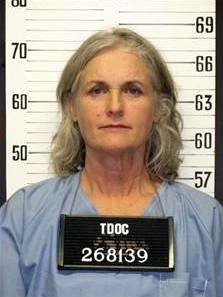
Photo courtesy of Tennessee Department of Corrections
Two husbands. Two suspicious deaths. Three trials. And a life sentence that was ultimately overturned.
The case of Raynella Dossett Leath is one of the most complicated and debated criminal cases in Knox County, Tennessee history. For years, it kept investigators, prosecutors, and true crime followers searching for answers that the courts never fully delivered. And on April 4, 2026, Raynella Leath was found dead at her home in northwest Knox County, having been in declining health. No foul play was suspected. She was 77 years old.
The questions she left behind, however, are not so easily laid to rest.
A Life That Looked Ordinary At First
Raynella Bernardene Large was born on October 25, 1948, in Oak Ridge, Tennessee. Her father was a nuclear scientist, and she was raised in a community largely built around the scientific work happening in that part of East Tennessee. She attended Oak Ridge High School, graduating in 1966, and went on to earn her nursing credentials. That career path would later become central to the suspicions surrounding her.
In 1970, she married Ed Dossett, the Knox County District Attorney. The two had met and fallen in love at East Tennessee State University. Together they built a life on a farm west of Knoxville and raised three children. On the surface, it was a stable and respectable life. But beneath that surface, tragedy and suspicion were quietly taking root.
More True Crime: She Chose a Man Over Her Sons: Susan Smith’s Tangled Web
The First Husband: Ed Dossett
By the summer of 1992, Ed Dossett was gravely ill with terminal cancer. He was only 44 years old. He spent most of his remaining time on the family farm in the Solway area, where Raynella cared for him as both a wife and a nurse.
On July 9, 1992, Ed was found dead in the couple’s corral, supposedly having been trampled by cattle. The ruling raised eyebrows almost immediately. Ed had grown up on a farm. The idea that he had been trampled by his own animals struck many in the community as unlikely. There was also the matter of how a man weakened by terminal cancer and heavy medication had managed to make it all the way from the house to the cattle in the first place.
Despite those concerns, the first medical examiner ruled his death an agricultural accident. The case was officially closed, at least for the time being.
Then, just six months after Ed’s death, Raynella remarried.
The Second Husband: David Leath
Her new husband was David Leath, a retired barber. The two settled into life together on the same Solway area property. For years, nothing drew outside attention to the household.
That changed on March 13, 2003, when Raynella called 911 to report that she had found David dead in their bedroom. She told authorities it was a suicide.
Investigators were skeptical from the start. Three shots had been fired from a .38 caliber Colt revolver. The positioning of the weapon and the sequence of the shots did not align cleanly with what a self-inflicted death typically looks like. Authorities also determined that David had been drugged with a combination of medications similar to what might be used to sedate a surgical patient. As a registered nurse, Raynella had both the knowledge and the access to administer such a combination without raising immediate alarm.
The investigation into David’s death prompted a fresh look at what had happened to Ed Dossett more than a decade earlier. A second medical examiner reviewed Ed’s case and found that the morphine levels in his system at the time of his death were extraordinarily high. So high, in fact, that it was considered unlikely he could have been functioning or even alive under normal circumstances. That finding reframed everything.
In 2006, Raynella was charged with administering a fatal morphine overdose to Ed Dossett. Two years later, in 2008, she was charged with the first-degree murder of David Leath.
Three Trials and a Conviction That Didn’t Hold
The legal road that followed was long, complicated, and ultimately unresolved.
Raynella’s first trial for David’s murder began in May 2009. She maintained throughout that David had taken his own life. After hours of deliberation, the jury could not reach a unanimous verdict. The judge declared a hung jury and a retrial was scheduled.
The second trial began in January 2010. This time, the jury deliberated and returned a verdict. On January 25, 2010, Raynella Dossett Leath was convicted of first-degree murder and sentenced to between 51 years and life in prison. Following the conviction, the charges related to Ed Dossett’s death were dropped.
It seemed the matter was settled. It was not.
The trial judge, Richard Baumgartner, had been struggling with a serious opiate addiction during the proceedings. He was subsequently investigated by the Tennessee Bureau of Investigation and ultimately forced off the bench. His impairment during the trial became the basis for Raynella’s legal team to seek a new trial, and they succeeded.
After serving approximately six years, Raynella’s conviction was overturned. She was released in 2016 to await a third trial.
That third trial took place in May 2017. After both sides presented their cases and delivered closing arguments, Senior Judge Paul Summers made a decision that stunned the courtroom. Rather than sending the case to the jury, he granted a directed verdict of acquittal, ruling that the state had failed to present sufficient evidence to support a conviction. The jury never got to vote.
At least one seated juror later said publicly that he would have voted guilty.
The Evidence That Raised Eyebrows
Even after the acquittal, several details from the investigation continued to fuel public debate.
Gunshot residue testing conducted on the day of David’s death found residue on his hands but not on Raynella’s. The prosecution argued she had drugged him the night before, shot him after their daughter left for school that morning, and then spent the rest of the morning carefully constructing an alibi. The defense argued she had been at the hospital, then at her daughter’s school, and that witnesses and records confirmed her whereabouts.
Defense attorneys also presented medical records indicating that David Leath had been diagnosed with dementia in 2002. In the months before his death, his physician had documented significant behavioral and cognitive changes including mood shifts, memory loss, and increasing feelings of frustration and hopelessness. The defense argued those records supported the possibility that David had taken his own life.
DNA recovered from latex gloves found at the scene was tested against every female law enforcement officer who had been present that day. None were a match. The profile was found to be consistent with a DNA standard taken from Raynella Leath herself.
The judge concluded the state’s case was not enough. And with that ruling, the legal pursuit of Raynella Dossett Leath came to an end.
More True Crime: She Chose a Man Over Her Sons: Susan Smith’s Tangled Web
A Quiet End to a Very Loud Story
After the 2017 dismissal, Raynella returned to her farm in northwest Knox County and lived quietly for nearly a decade. The case that had consumed years of courtroom time, generated a true crime book, a CBS News documentary, and widespread media coverage slowly faded from the daily headlines.
On April 4, 2026, a family member found her dead at her home. She had been in declining health in her final months. The Knox County Sheriff’s Office and Medical Examiner’s Office were notified, as is standard in unattended deaths. No foul play was suspected.
Her defense attorney issued a statement expressing grief and gratitude, grateful that she had passed without a conviction attached to her name.
To this day, there are people who believe Raynella Dossett Leath was responsible for the deaths of both of her husbands and was never truly held accountable. Others believe the evidence simply was not there and that the system, for all its flaws, ultimately worked as it was designed to.
What is not in dispute is that the Raynella Dossett Leath case laid bare just how much can go wrong inside a courtroom. A tainted judge, a complicated evidence trail, and years of legal maneuvering can determine the outcome of a murder case just as much as the facts themselves.
Justice, in this case, remains a matter of perspective.
Lisa Crow contributed to this article. She is a true crime junkie and lifestyle blogger based in Waco, Texas. Lisa is the Head of Content at Gigi’s Ramblings and Southern Bred True Crime Junkie. She spends her free time traveling when she can and making memories with her large family which consists of six children and sixteen grandchildren.