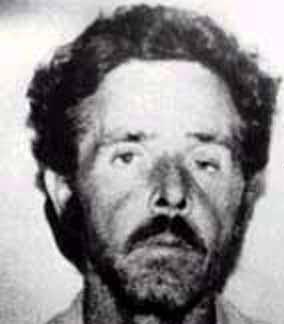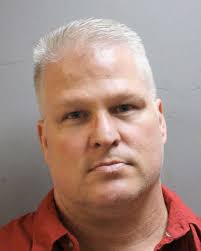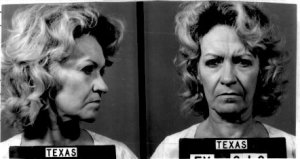
Photo courtesy of the Texas Department of Criminal Justice
Under the ornamental wishing well in the front yard of a mobile home near Gun Barrel City, Texas, investigators found what they were looking for. The body of Jimmy Don Beets, a Dallas Fire Department captain, had been shot twice in the head and buried there by his wife.
A few yards away, under a storage shed in the backyard, they found another one.
Betty Lou Beets had been married five times. Two of those husbands ended up in the ground on her property. She became one of the most infamous women in Texas criminal history and, ultimately, one of the very few women the state of Texas has ever put to death.
A Pattern of Marriages and Violence
Betty Lou Beets was born in 1937 and grew up in poverty, raised by a violent alcoholic father. She married for the first time at fifteen years old. By the time she was in her forties, she had been through four husbands and left a trail of violence behind her.
Her second husband, Bill Lane, was shot by Betty Lou in 1970. He survived. He later testified at her murder trial. She was acquitted after Lane admitted he had threatened her life first. The two remarried and divorced again within a month.
She later attempted to run over her third husband, Ronnie Threlkold, with a car in 1978. He also survived and also testified at her trial.
Her fourth husband, Doyle Wayne Barker, was not so lucky. He disappeared in 1981. Betty Lou reported him missing. No one found him. She moved on.
In 1982, she married Jimmy Don Beets.
The Disappearance of Jimmy Don Beets
On August 6, 1983, Betty Lou Beets reported her husband missing. She told investigators he had gone out on his fishing boat on Cedar Creek Lake and never came home. When authorities located the boat days later, they found it drifting. Inside were Jimmy Don’s heart medication, his fishing license, and a life jacket. Jimmy Don was not there.
Investigators searched for three weeks. They found no sign of him. The case went cold.
Betty Lou did not waste time grieving. Within weeks of reporting her husband missing, she began the process of trying to collect his pension from the Dallas Fire Department. She had also previously attempted to take out a $10,000 life insurance policy on Jimmy Don without his knowledge.
It would be nearly two years before the truth surfaced. And it came from inside the house.
The Tip That Broke the Case
In June 1985, Henderson County investigators received an anonymous tip about suspicious activity at the Beets property. The caller was later identified as one of Betty Lou’s own sons, Robert Branson. He told authorities his mother had shot Jimmy Don and that he had helped her bury the body under the wishing well in the front yard.
Investigators obtained a warrant and dug up the property. They found Jimmy Don Beets exactly where Robert said he would be. He had been shot twice in the head at close range. The bullets matched a .38 caliber firearm that had been collected from the property during a separate incident involving Betty Lou’s younger son.
When investigators kept digging, they found Doyle Wayne Barker under the shed in the backyard. He had been shot in the head as well. Betty Lou’s daughter Shirley told investigators she had helped her mother bury Barker’s body back in 1981.
Betty Lou was arrested immediately. She was charged with capital murder in the death of Jimmy Don Beets. The charge against her was murder for remuneration, meaning she killed him for financial gain. Prosecutors pointed to the pension, the insurance attempts, and the pattern of collecting after her husbands disappeared.
She was never tried for the murder of Doyle Wayne Barker. The capital murder charge for Jimmy Don carried the death penalty. Prosecutors did not need to try her twice.
Related: The Waco Grandmother Who Poisoned Her Boyfriend
The Trial
Betty Lou Beets stood trial in Henderson County in the fall of 1985. She pleaded not guilty. Her defense strategy was to blame two of her children for the murders. That did not hold up. Her own children had already testified against her.
Robert Branson told the jury that his mother had explicitly told him she intended to kill Jimmy Don before sending him out of the house that night. He came back two hours later and found Jimmy Don dead. Robert said he helped his mother move and bury the body.
Prosecutors presented evidence of the insurance scheme, the buried bodies, the matching bullets, and the financial records showing Betty Lou had been working to access Jimmy Don’s pension. They argued this was a calculated killing for money, not a crime of passion or self-defense.
What the jury never heard was any meaningful testimony about Betty Lou’s history of abuse. Her trial attorney failed to investigate or present evidence of her background, which included severe physical and sexual abuse that began in childhood and continued through multiple marriages. No expert testimony on battered woman syndrome was offered. No documentation of her injuries was introduced. An Amnesty International report later noted that her attorney actually obtained her signature on a media rights agreement for her story while representing her, a serious conflict of interest. That same attorney was later elected district attorney and subsequently went to prison himself for misconduct.
The jury convicted Betty Lou Beets of capital murder on October 11, 1985. Three days later, during the penalty phase, she was sentenced to death.
Fifteen Years on Death Row
Betty Lou Beets spent fifteen years at the Mountain View Unit in Gatesville, Texas, fighting her conviction through the courts. Her appeals raised serious issues about the quality of her legal representation at trial and the failure to present mitigating evidence of abuse.
In 1991, a federal district court judge agreed that her trial attorney’s conduct had violated her constitutional right to adequate counsel and ordered a new trial. The state of Texas appealed. The Fifth Circuit Court of Appeals reversed the ruling and reinstated the death sentence.
Her attorneys and advocates argued that juries in capital cases are required to hear mitigating evidence before sentencing someone to death. The abuse she suffered throughout her life, beginning at age five and continuing through every marriage, was never put before the jury that decided whether she lived or died. Women’s rights organizations, anti-death penalty advocates, and even officials from several European countries called on Texas to spare her life.
In February 2000, the Texas Board of Pardons and Paroles denied clemency by a vote of 15 to 0. Governor George W. Bush, then in the middle of his presidential campaign, denied a request for a 30-day stay. He stated publicly that the law applied equally regardless of gender.
Betty Lou Beets was executed by lethal injection at the Huntsville Unit on February 24, 2000. She was 62 years old. She declined a final meal. She made no final statement. No members of the Beets family were present.
Jimmy Don Beets’s son Jamie witnessed the execution and told reporters afterward that she showed no remorse and no fear as she was strapped to the gurney.
More True Crime: Kimberly Reps: When Jealousy Turned Deadly
One of Only Nine
Texas leads the nation in executions and it is not close. Since the death penalty was reinstated in 1982, the state has executed 598 people. That number dwarfs every other state in the country.
But Texas executes women at a remarkably rare rate. In the entire history of the state, only nine women have ever been put to death. That is nine out of nearly 600 executions in the modern era alone.
The reasons are a combination of legal, practical, and cultural factors. To receive the death penalty in Texas, prosecutors must prove future dangerousness, typically established through prior violent offenses. Death penalty cases are expensive, closely watched, and prosecuting a woman carries significant public scrutiny. Women tend to generate more sympathy from juries, and defense attorneys can often argue abuse histories, mental health, or other mitigating factors that make the ultimate sentence harder to secure.
Betty Lou Beets was the second woman executed in Texas since the Civil War, coming just two years after Karla Faye Tucker in 1998. She was also the oldest person executed in the state at that time.
Regardless of what abuse she endured in her life, and the evidence suggests it was severe, a jury found that she shot Jimmy Don Beets while he slept, buried him under a wishing well, and then went about collecting his money. A court found that a second husband ended up in the backyard under similar circumstances. Texas decided that was enough.
Lisa Crow contributed to this article. She is a true crime junkie and lifestyle blogger based in Waco, Texas. Lisa is the Head of Content at Gigi’s Ramblings and Southern Bred True Crime Junkie. She spends her free time traveling when she can and making memories with her large family which consists of six children and sixteen grandchildren.