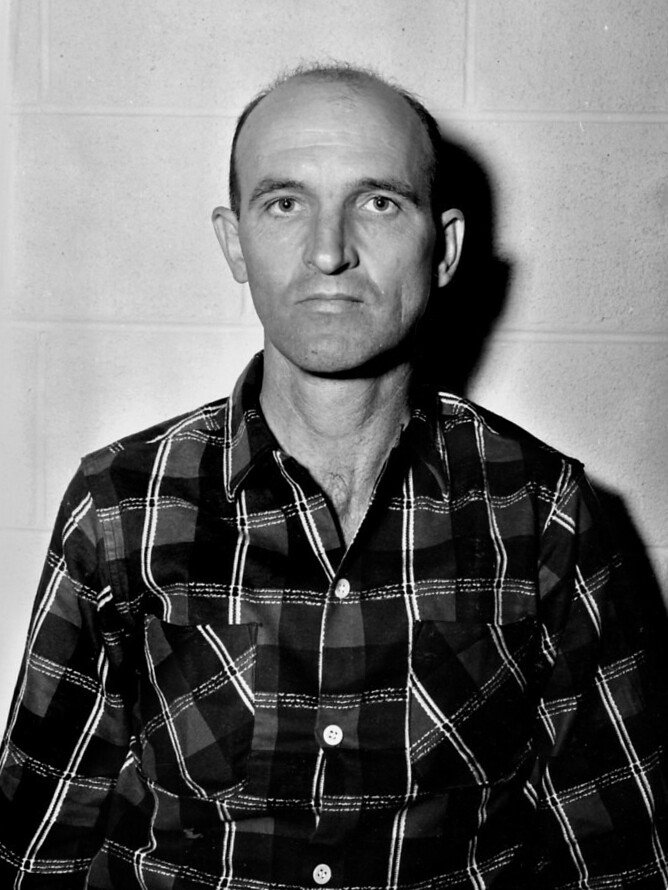
Photo courtesy of the FBI
The Mississippi Burning Murders | Neshoba County, Mississippi | 1964
Three young men drove down a highway in Mississippi on the night of June 21, 1964, and were never seen alive again.
James Chaney was 21 years old, a Black civil rights organizer from Meridian, Mississippi. Michael Schwerner was 24, a Jewish social worker from New York City. Andrew Goodman was 20, a college student from New York who had arrived in Mississippi just one day before he was killed. All three were volunteers with the Congress of Racial Equality, working to register Black voters in one of the most dangerous states in the country to do so.
Their murders shook the nation. Their killers walked free for decades. And it would take forty-one years before anyone was finally convicted of their deaths.
Freedom Summer and a Target on Their Backs
By the summer of 1964, Mississippi was a powder keg. The White Knights of the Ku Klux Klan had more than 10,000 members in the state. They staged 61 simultaneous cross burnings across Mississippi on a single night in April 1964. They burned Black churches. They beat and murdered with near total impunity. State and local law enforcement were not just indifferent to their violence. In many cases, they were participants.
Michael Schwerner had been in Mississippi since January of that year, organizing voter registration drives and boycotts of segregated businesses in Meridian alongside James Chaney. The Klan had fixated on Schwerner specifically. They called him “Goatee” and worse. His name came up regularly at Klan meetings as someone who needed to be eliminated. Weeks before the murders, Sam Bowers, the Imperial Wizard of the White Knights, gave the order.
The trap was set in motion on June 16, 1964, when armed Klansmen descended on Mount Zion Methodist Church in Neshoba County, a Black church that Schwerner had arranged to use as a Freedom School. Schwerner was not there that night. The Klansmen beat the churchgoers anyway and burned the church to the ground. They knew Schwerner would come back to investigate.
He did. On June 20, Schwerner returned from a civil rights training session in Ohio with Chaney and Goodman. The next day, June 21, the three men drove to Neshoba County to interview witnesses and survey the damage at the burned church.
They never made it home.
More True Crime: James Earl Ray: A Dark Chapter in Civil Rights History
Arrested, Released, and Ambushed
On the afternoon of June 21, Deputy Sheriff Cecil Price stopped the three men on a traffic charge and held them in the Neshoba County jail in Philadelphia, Mississippi for several hours. They were not allowed to make a phone call.
Price had already made his own call. While Chaney, Schwerner, and Goodman sat in that jail, Price contacted Edgar Ray Killen, one of the leaders of the local Klan and, remarkably, a Baptist minister. Killen began organizing. He directed Klan members to gather in Philadelphia that evening. He told some of them to bring gloves.
Shortly after 10 p.m., Price collected a speeding fine from Chaney and told the three men to get out of the county. They climbed into their blue Ford station wagon and headed south on Highway 19 toward Meridian. Price let them get a head start. Then he got in his patrol car and followed.
He caught up with them just inside county limits. He pulled them over and loaded all three men into his car. Two other cars filled with Klansmen who had been alerted by Price pulled up. The three civil rights workers were transferred and driven down an unmarked dirt road called Rock Cut Road.
There, James Jordan shot James Chaney. Wayne Roberts shot Michael Schwerner and Andrew Goodman.
Their bodies were driven to a cattle farm outside Philadelphia and buried in a partially constructed earthen dam. Edgar Ray Killen was not present for the murders. He had gone to a funeral home to establish an alibi.
The Search and the Cover-Up
When Chaney, Goodman, and Schwerner failed to check in that night, fellow activists began calling jails and police stations. That was standard protocol for civil rights workers in Mississippi. By June 22, the Department of Justice was involved. The FBI flooded the area with agents.
Mississippi officials were not helpful. Sheriff Lawrence Rainey suggested the men were simply hiding to generate publicity. Governor Paul Johnson dismissed concerns, saying the young men could be in Cuba. The Klan, meanwhile, maintained its silence.
The burned-out station wagon was found on June 23. No bodies. The FBI named the investigation MIBURN, for Mississippi Burning, and launched a massive search through swamps, back roads, and hollows. The National Guard assisted. President Lyndon Johnson met personally with the parents of Schwerner and Goodman in the Oval Office.
During that search, investigators dragging the rivers found the bodies of eight other Black men, unrelated to this case, who had been killed and dumped. Their deaths drew almost no national attention. That disparity was not lost on the civil rights community.
On August 4, 1964, six weeks after the murders, an FBI informant finally led investigators to the dam site. The bodies of Chaney, Schwerner, and Goodman were recovered. All three had been shot. James Chaney had also been severely beaten.
Federal Charges, But No Murder Convictions
Mississippi state authorities refused to prosecute. Murder was a state crime, and the state had no interest in pursuing it. The federal government could not charge murder directly, so in December 1964, the Justice Department charged 21 men with conspiring to violate the civil rights of the three victims.
The first trial ended without convictions when the judge dismissed most of the charges. A second federal trial was finally held in October 1967. Seven of the 18 defendants were found guilty of civil rights conspiracy violations, including Deputy Sheriff Cecil Price. Edgar Ray Killen, whose jury deadlocked after one juror said she could not convict a preacher, went free.
The seven who were convicted received sentences ranging from three to ten years. None of them served more than six years. No one was ever charged with murder in connection with the deaths of James Chaney, Michael Schwerner, or Andrew Goodman. Not in 1967. Not for decades after.
More True Crime: She Chose a Man Over Her Sons: Susan Smith’s Tangled Web
The Case Reopened
In 2004, Mississippi Attorney General Jim Hood reopened the case. Prosecutors had new witnesses, old confessions that had surfaced over the years, and a renewed determination to pursue a murder charge against the one man most responsible for organizing the killings: Edgar Ray Killen.
Killen was 80 years old by then, using a wheelchair, and still living in Mississippi. He had never expressed remorse. When approached by investigators in the late 1990s, he denied everything.
At trial in June 2005, witnesses testified that Killen had traveled to Meridian to recruit carloads of Klansmen on the day of the murders. They said he had directed the operation, told members to bring gloves, and then slipped away to the funeral home while the killings took place. Prosecutors argued that his absence from Rock Cut Road did not make him innocent. It made him the organizer.
On June 21, 2005, exactly 41 years to the day after the murders, the jury returned its verdict. Edgar Ray Killen was convicted on three counts of manslaughter. He was sentenced to three consecutive 20-year prison terms.
He died in prison in January 2018 at the age of 92.
The Legacy
The murders of James Chaney, Michael Schwerner, and Andrew Goodman did not stop Freedom Summer. More than 700 volunteers stayed in Mississippi that summer and registered thousands of Black voters. The killings galvanized the country and provided critical momentum for the passage of the Civil Rights Act of 1964, which was signed into law by President Johnson on July 2 of that year.
In 2016, Mississippi Attorney General Jim Hood officially closed the investigation, concluding there was insufficient evidence to charge any of the remaining surviving participants.
In 2021, the FBI case files were transferred to the Mississippi Department of Archives and History and made available to the public for the first time. They include investigative records, informant reports, witness testimonies, and photographs from the recovery of the bodies.
Mount Zion Methodist Church was rebuilt. It still stands in Neshoba County.
James Chaney, Michael Schwerner, and Andrew Goodman were in their twenties. They were trying to help people vote. They were murdered for it by men who believed the law would protect them forever. For 41 years, they were right. But not forever.
Lisa Crow contributed to this article. She is a true crime junkie and lifestyle blogger based in Waco, Texas. Lisa is the Head of Content at Gigi’s Ramblings and Southern Bred True Crime Junkie. She spends her free time traveling when she can and making memories with her large family which consists of six children and fifteen grandchildren.