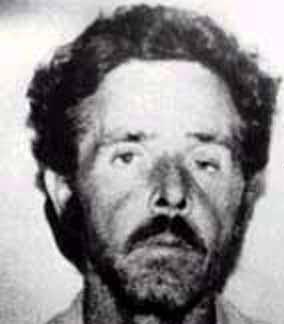
Image courtesy of ChronLine
Just days before Christmas in 1985, Ed and Minnie Maurin vanished from their rural Washington farm. The elderly couple had spent decades running a small Christmas tree business, known locally for their kindness, routine, and reliability. When Minnie failed to show up for a church luncheon she was hosting, friends immediately sensed something was wrong.
Inside the Maurin home, everything felt off. Personal belongings were left behind. The house was locked. Their car was gone. What initially looked like a strange disappearance would soon reveal itself as a brutal double murder that would haunt the community for nearly three decades.
A Crime Discovered Too Late
The Maurins’ vehicle was later found abandoned, stained with blood and containing evidence that pointed to violence. Soon after, the bodies of Ed and Minnie were discovered dumped in a ditch not far from their home. Both had been shot. The manner of disposal made it clear this was not a crime of passion but a calculated act meant to eliminate witnesses and delay discovery.
Investigators quickly believed robbery was the motive. The couple was known to keep cash from Christmas tree sales on hand. Despite that theory, the case stalled almost immediately. Evidence was thin, leads dried up, and fear ran deep in the small community.
Silence That Lasted Decades
Rumors circulated almost from the beginning. Several locals quietly suspected two brothers with reputations for violence and intimidation. Witnesses claimed to have seen the Maurins in their vehicle on the day they disappeared. Others said they were threatened afterward, warned to stay silent or face consequences.
That fear worked. For years, no one was willing to testify. Tips came in sporadically, but none were strong enough to push prosecutors forward. As time passed, memories faded, witnesses moved away, and the murders became a cold case — one spoken about in hushed tones, especially around Christmas.
The Break That Changed Everything
More than twenty years later, investigators revisited the case with fresh eyes. Advances in case review techniques, combined with renewed witness cooperation, finally began to crack the wall of silence. One witness admitted they had waited years to come forward out of genuine fear for their life.
By the time authorities were ready to act, one of the two suspects had already died. In 2012 — 27 years after the murders — charges were finally filed against Ricky Riffe. The delay did not erase the evidence. Instead, it highlighted how intimidation and fear can delay justice but not destroy it.
Conviction at Last
At trial, jurors heard how the Maurins were lured, robbed, and murdered, then disposed of like evidence rather than people. Testimony revealed the climate of fear that had protected the killer for decades. Despite the passage of time, the case was strong enough to secure convictions on multiple counts, including first-degree murder, robbery, and burglary.
Riffe was sentenced to more than 100 years in prison, ensuring he would never walk free. For the Maurin family and their community, it was justice long delayed — but justice nonetheless.
A Christmas Forever Changed
The Christmas Tree Murders serve as a chilling reminder that evil doesn’t always announce itself loudly. Sometimes it hides behind fear, silence, and time. But even decades later, truth has a way of surfacing.
For Ed and Minnie Maurin, justice came 27 years late — but it came.
Lisa Crow contributed to this article. She is a true crime junkie and lifestyle blogger based in Waco, Texas. Lisa is the Head of Content at Gigi’s Ramblings and Southern Bred True Crime Junkie. She spends her free time traveling when she can and making memories with her large family which consists of six children and fifteen grandchildren.